
Structured cabling and network infrastructure in Austin
Secure, efficient networking is the backbone of every modern security system. Structured cabling (also called structured wiring), fiber, and wireless for commercial facilities across Austin and Central Texas, in new construction or existing buildings, as a standalone scope or as your Division 27 (communications) and Division 28 subcontractor.
What we install
- Structured cabling. Reliable, high-performance cabling for your whole network.
- Fiber networks. High-speed fiber for rapid, long-distance transmission.
- Wireless systems. Scalable, secure connectivity across large or complex sites.
- Monitoring and optimization. Peak efficiency and uptime, watched continuously.
Cable and power platforms on our partner list include Windy City Wire and Tripp Lite. Power & cabling partners
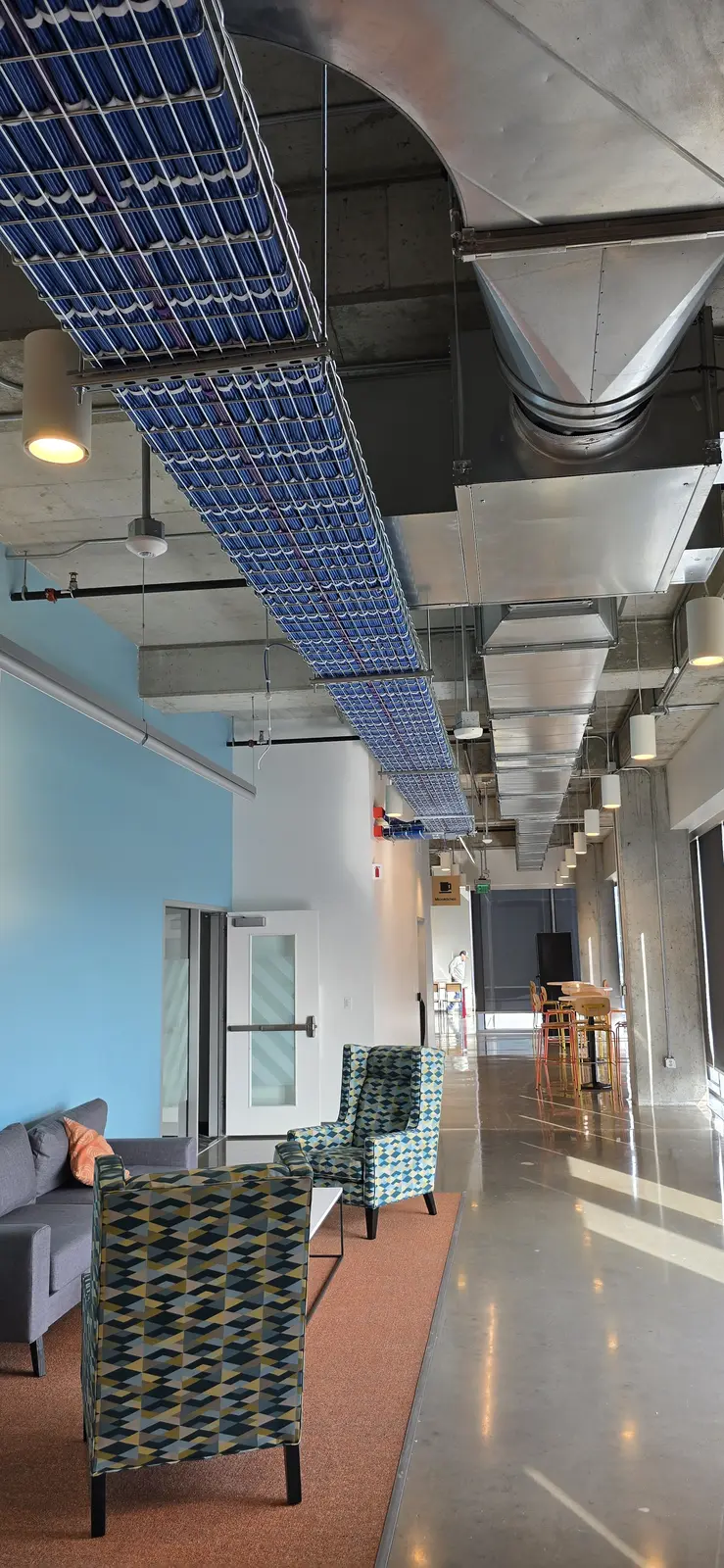
The layer everything else rides on
Cabling is the one trade that decides whether the rest of the building works.
Designed with the systems, not before them
Cameras, access control panels, intercoms, and wireless access points all have different pathway, power, and distance requirements. When the same company designs the cabling and installs the devices, those requirements are known up front instead of discovered at rough-in.
Division 27 and 28 on commercial construction
On new builds we work as the low-voltage subcontractor, coordinating with the general contractor and the electrician so pathways, backboxes, and terminations are ready when devices arrive.
Documented for the next person
Labeling, testing, and as-builts are part of closing a project, not an extra. Compliance and audit documentation is covered under our maintenance and service agreements.
Campus and between-building fiber
Fiber carries traffic between buildings and across campuses, which is routine on the school district, municipal, and utility sites we work on.
Fiber, testing, and as-builts
What to ask for in the scope, so the cable plant can be proven and worked on later.
Fiber scope
A fiber scope names the route and the buildings it connects, the fiber type, the strand count, the enclosures and termination method at each end, and the pathway it runs through. Spare strands are cheap to include at install and expensive to add later, so decide how many to leave dark.
Testing
Testing means measuring each run against a standard rather than checking that a link lights up. Copper is tested with a certifier, and fiber is tested for loss. Ask your installer which standard each run is tested to and whether you receive the results.
As-built documentation
As-builts show what was actually installed, not what was drawn. Ask your installer for these at closeout:
- Labeling scheme. A label at both ends of every run and on every panel port.
- Drawings. Floor plans or riser diagrams marked with outlet and panel locations.
- Test results. Per-run pass or fail reports, in a file you keep.
Common questions
Do you install structured cabling as a standalone job, or only with security work?
Both. Structured cabling, fiber, and wireless are their own service line at AK Technologies, and we take cabling-only scopes. They also underpin every other system we install, which is why the cabling and the devices riding on it are usually designed together rather than by two trades.
Do you work as the Division 27 and 28 low-voltage subcontractor on construction projects?
Yes. On commercial builds we work as the low-voltage subcontractor, coordinating with the general contractor and the electrician so pathways, backboxes, and terminations are ready when the devices arrive.
Can you certify and document the cable plant?
Documentation and as-builts are part of how we close a project, alongside labeling and testing. Compliance and audit documentation is also covered under our maintenance and service agreements.
Do you handle fiber between buildings?
Yes. Fiber is used for high-speed, long-distance transmission between buildings and across campuses, which is common on the school district, municipal, and utility sites we work on.
Do you install structured cabling for new construction in Austin?
Yes. On new construction in Austin and Central Texas we install structured cabling as a standalone scope or as your Division 27 and 28 low-voltage subcontractor, coordinating with the general contractor and the electrician so pathways, backboxes, and terminations are ready when devices arrive. Cabling is labeled, tested, and documented with as-builts at closeout.
What are the disadvantages of structured cabling?
Structured cabling costs more up front than running cables as needed, and moving or adding outlets later means work in walls and ceilings. Copper runs also top out at 100 meters, so distant locations need fiber. AK Technologies designs the cabling with the devices, uses fiber between buildings, and labels, tests, and documents every run so it is easy to work on later.
Where we work
Austin, Round Rock, Cedar Park, Georgetown, Pflugerville, San Marcos, and commercial sites across Central Texas. Facility types include data centers, government, healthcare, higher education, K-12, financial, utilities, transportation, and manufacturing.
Start a project
Tell us the building, the drop count, and whether it is new construction or a retrofit.
Last updated